albufera · books · bike
Reeds and Mud, in El Palmar
I'd been halfway through the book since August. On Sunday I cycled to the Albufera to read the last chapter where it happens, and a boatman spoiled it for me a little.
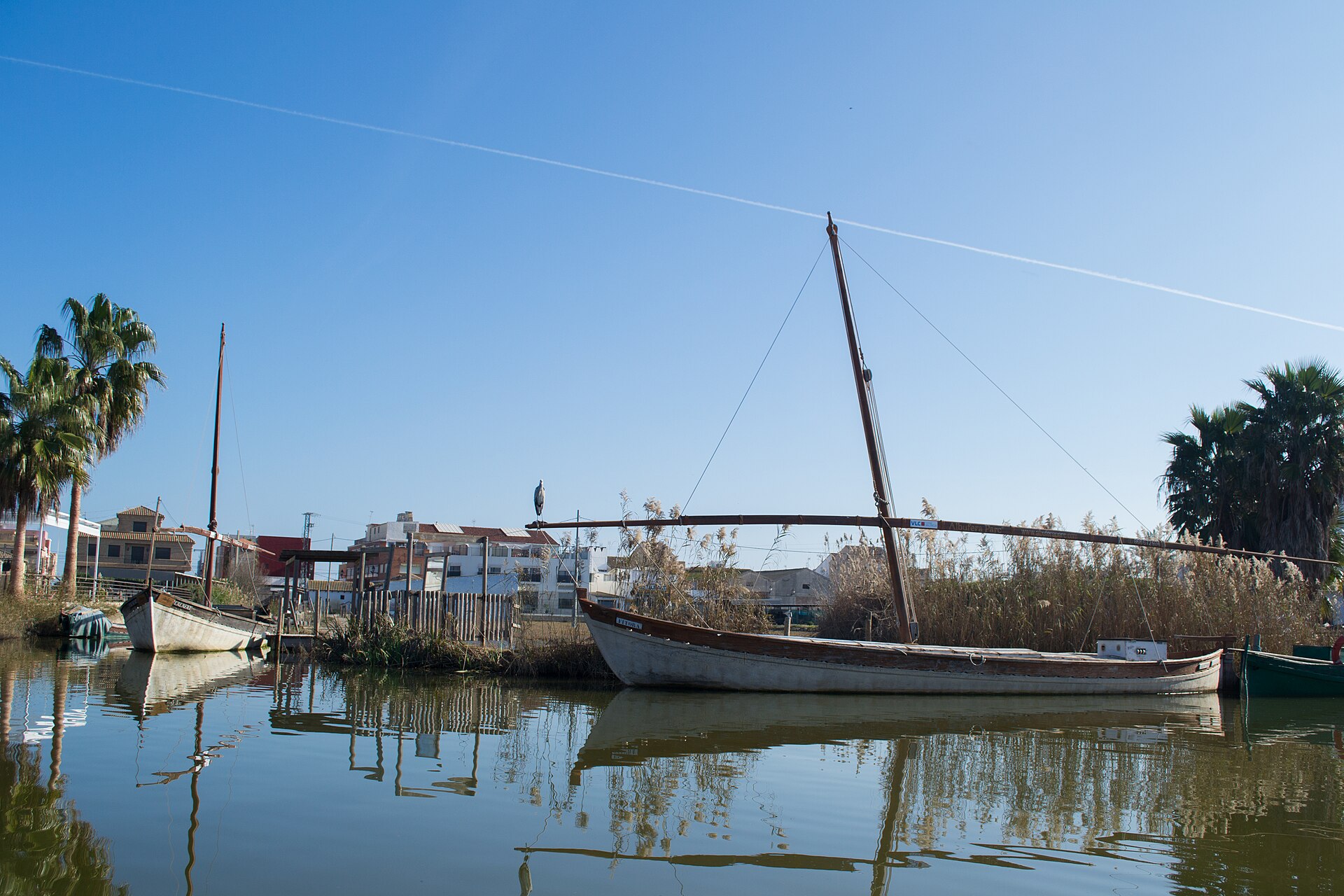
I have a complicated relationship with Cañas y barro, Blasco Ibáñez's Reeds and Mud. My uncle Paco gave it to me for my fifteenth birthday, with an inscription that said "So you know where you're from", and I gave up on page forty. I started again at nineteen, at the conservatory, and gave up on page sixty. This August, with the school closed and no weekday weddings, I took it off the shelf, firmly resolved to be a proper Valencian at last, and got as far as the second-to-last chapter. Then term started and the book stayed on the bedside table, a metro ticket for a bookmark, giving me a disappointed look every night.
On Saturday night, back from a wedding in Puçol, I saw it there and decided I wasn't going to read the last chapter in bed. I was going to read it in El Palmar, the village in the lagoon where the whole thing takes place. Marta said that was very me: turning something I'd been putting off into an outing so I could put it off a bit longer.
Twenty kilometres with brakes
I set off on Sunday at nine, with the book in the basket, a cheese sandwich and the thermos that drips. As far as Pinedo you ride the bike lane between market gardens, and then it runs alongside the El Saler road, with the pine woods on one side and, every so often, through a gap in the trees, the sea. It was my first long ride since Amparo helped me with the brake, and at every junction I squeezed both levers just for the pleasure of stopping properly. A cyclist in Lycra overtook me and gave me the look you give someone who brakes for no reason.
After El Saler the landscape opens out and goes flat, properly flat, like a table that's just been wiped. In October the rice has already been harvested. It isn't the green of the postcards any more but brown mud with short stubble, puddles reflecting the sky and white egrets standing in the middle of it, perfectly still, with a patience I've never had. It smelled of wet earth and burnt straw. In some far-off field a thin, straight line of smoke was rising, because there wasn't a breath of wind.
It took me an hour and twenty minutes. I arrived with jelly legs and the sandwich squashed flat by the book.
The landing stage
In El Palmar everything is restaurants with signs for all i pebre and duck paella, and men in aprons at the door asking "Lunch?" before you've even got off the bike. I rode straight past to the landing stage at the end, where the flat boats are. I sat on the edge of the planks with my feet dangling over dark green, perfectly still water that smells faintly of iron, and opened the book at the metro ticket.
I'm not going to tell you the ending here. I'll only say that I thought a novel from 1902 about fishermen couldn't hurt me, and I was wrong. Halfway through the chapter I had to stop and look at the water for a while, because the things that happen in the book happen exactly there, in that kind of water, among those reeds, and suddenly the Albufera wasn't a pretty view any more but a place where people had been very poor and very unhappy for a very long time.
I was on the last two pages when a man bailing water out of a boat with a tomato tin asked me what I was reading. I showed him the cover. He laughed with his whole mouth, which was missing two bottom teeth.
"Everybody brings that one," he said. "And nobody finishes it."
I told him I was nearly there. He asked how far I'd got and, before I could put my hands over my ears, told me how it ended. In detail. With the character's name and the exact spot, which according to him was right in front of us, and he pointed at a reed bed with the tin. Then he told me his grandfather had known one of the fishermen Blasco Ibáñez based the book on, which I very much doubt, and that in the village they still call anyone who drinks too much a Sangonera, after the town drunk in the novel.
What was left
His name is Rafa. He offered me a trip round in the boat for ten euros, "reader's rate". I told him I didn't have any cash, which was true, and he said in that case he'd do it for nothing, but only out to the reeds and back, because he had to have lunch. I sat on the middle plank with the book on my knees. He pushed us along with the pole, standing at the stern, planting it in the bottom and walking backwards down the boat, without making a sound. The water barely moved. An egret took off two metres away, deeply offended.
I thought of my grandfather, who was from the Cabanyal and not from here, but who called the sea "la mar", in the feminine, and called the Albufera "the lake", with a touch of contempt, the way you'd talk about a cousin from inland. I thought he'd have found it funny to see me there, sitting in a fishing boat with a book he never read and would probably have thought was laying it on a bit thick.
I read the last two pages in the boat, even though I knew what happened. Rafa kept quiet the whole time, out of respect or because he was tired. When I closed the book he said "See?", as if he'd written it himself.
I cycled home with the sun in my face and the book in the basket, finished, twelve years after the inscription. Marta asked how it went and I said great, I'd finished it, but a man with a tomato tin had spoiled the ending. She said that didn't count as finishing it.
I've left the metro ticket inside, on the last page, under the word "fin".
Keep reading
The man in row seven
My Tuesday nights at the original-language cinema, alone, in the same seat. A stranger who peels mandarins in the dark and a film nobody else saw was out of focus.
The back brake
A Wednesday morning at a neighbourhood bike workshop, a rusty cable, a mechanic who wouldn't let me touch anything at first and a sticky note finally crossed out.
My grandmother's mocadorà
The 9th of October, a silk handkerchief full of marzipan fruit, a bike with no back brake and the custom my grandfather never once skipped.